Showing posts with label art of living. Show all posts

Wednesday, 15 June 2016

मैंने तो इसे use ही नहीं किया


Laxmi is pint sized, not even four feet tall and is thin as a stick. She barely speaks. She's very shy and nervous and yet, paradoxically, she works in a quietly self-assured sort of way.  She came to work for me about two years ago and I wasn't sure she was old enough to be working but was told that she was 18 years old and that everyone in her family was extra petite. The man who brought her to me was her cousin brother-in-law and he said she'd done a stint at the Ansal's club, here, in Palam Vihar. I figured they must have got their paper work in order to put her on their rolls, so it was all right to take her on. Not having been to school there was no way to verify and I don’t think that in the villages they bother with things like a birth certificate, so I had no choice but to just take his word for it. .She was raw from the point of experience of working in a home. Training her was Mahipal's job because she was really green and I couldn't have done it. She basically cleans the apartment and other chores like washing clothes and dishes that don't really require her to be educated.

For the better part of two years, I have really had very little to say to her and vice versa. Gradually, I noted, every time Mahipal was on leave, she had really picked up quite a lot of other chores and was doing them quite adequately. She's learned to make the beds, dust and even lay the table for lunch. She doesn't speak much, not even in response to questions. She has this terrified posture all the time that I've often wanted to (but I don't) take hold of her tiny frame and shake her up - everything is so tightly held within that she just can't speak.

She's a decent enough worker. Although sometimes a bit of a shirker, quite unpredictable and she does things is a maddening way without using her brain. A shelf was wobbling in my meditation room so the music player had been left on the bed. A carpenter willing to undo and re-install the shelf took a while to find as Ansal's, the builders, have built very kaccha walls. So it sat on the bed for over a year. Last month the shelf was repaired and I put the music player back on it. For a week, I found that when she went to clean the room each morning, she'd remove it from the shelf to put it back on the bed. I'd put it on the shelf in the evening and she'd do it again the next day. It went on for a full week because each day I'd forget until I saw it removed from the shelf in the eveing, and by then she had left for the day. I had to make special note tell her that its rightful place was on the shelf and not on the bed! It's something I took for granted that she'd have understood, since the shelf was repaired in her presence; common sense? But she didn't figure that out.  That's how limited is her capacity to think. And adding to this, her lack of communication skills also really irks. She's totally illiterate. She cannot read numbers or even count change accurately.

These past two months Mahipal has been away so I have been very short staffed and had to do a lot of housekeeping chores I would not otherwise deal with. The persistent doorbells with delivery of stores and supplies are very disturbing, not to mention the numerous phone calls that I have to make to order them. So, each day I make an effort to teach her to a to tell the vendors who do the deliveries at home that she cannot read and ask them to show her what they have brought - “क्या लाये हो”  and where is the item mentioned in the bill and how much do they have to be paid – “बिल में कहाँ लिखा है और  कितने पैसे देने है” and somehow we've come to a point that she has understood the merit of doing this and tells them she's अन्पड़ [illiterate] so please do the needful. They don't really have a choice, so when she does ask, they take her through each item in the bag and thankfully we've figured it out such that I don't have to open the front door with every doorbell and she's now learning to take on this responsibility - more relevant is that in talking to the vendors, she's more confident about dealing with them. It's quite sweet how they oblige and show her. I actually watched the sabziwala [vegetable vendor] do it the other day, taking out one thing at a time and pointing it out to her on the bill. Today, she actually came with a vitamin I normally take, to check if it was the right one, because the packaging was different and she didn’t recognise it.  So, it works. I am not certain that she does follow this process of checking all the time, but at least some of the time I have proof of her conscientiousness in this regard.

But, despite all the strides we've taken, the lack of language skills and her innate reservation about speaking is intimidating. I'm scared to leave her alone in the apartment because if there's a mishap she cannot even call the guard on the intercom as she doesn't know how to use the phone and can't read numbers. And I don't like her leaving the front door open when no-one else's around because however safe the condominium may be, she's still a young girl who just can't stand up for herself well enough.

However, there are times when this near-mute, unlettered, intense, well-intentioned girl surprises me. She'll remember to make my tea on time every afternoon and bring it on the dot at 4 pm sharp, on a tray that's perfectly laid.  She'll show the new staff the ropes even when I'm not reassured that she knows them herself. And yesterday was the icing on the cake.

I like my morning tea light and it needs precisely four minutes to brew. When she looks at the clock in the kitchen, each day, it ends up an approximation of the necessary 4 minutes, so it's a different shade of brew with too much flavour or too little. So, I got her, what I thought would be, a foolproof kitchen timer. You had to turn it anti-clockwise to wind it up and then clockwise to 4, and it would ring an alarm in 4 minutes. On Sunday, I'd taken to using it myself. A pale blue, plastic teddy bear shape with a nice round tummy it was a cute toy in the kitchen and I always smiled when I set it up. This Sunday, the one just gone by, I found something was not quite right with the timer. The alarm didn't go off.  The next day I asked Laxmi what had happened why the timer wasn't working. Had she broken it? She said something in her usual muffled incomprehensible nothingness. I got a bit stern and repeated myself. Sometimes that's the only way to get her to open her mouth and get the words out coherently. What I heard stopped me in my tracks.

This unlettered, village girl, who frustrated me with her unfathomable ways, confounded me with her irrational fear and more said to me: “मैंने तो इसे use ही नहीं कियाI” I was stunned. I wasn't sure I'd heard right, so I asked her to repeat what she had said. And she said it again: “मैंने तो इसे use ही नहीं कियाI” [I haven’t even used it] Uneducated as she was she’d somehow picked up and used an English word, constructing a sentence using two languages, perfectly. How was that possible?  I was flabbergasted. It really made me think about the idea of intelligence versus education.

How does it work that someone so unlettered, who didn’t know the meaning of words could use them with such accuracy?  And then, what causes her to feel so much fear despite this innate intelligence that enables language skills in the absence of any formal education? It says a lot for our capacity to be present and channel the flow of our natural intelligence. Of how, when we want to learn things we pick them up with ease and when the same things become a chore, then we plod and make the stupidest of mistakes. I’ve observed this even with myself that when something comes from the heart, where there is passion, it not only flows but comes forth in the most brilliant ways, which I know that I could not have managed had I used my mind and its limited knowing.

I do realise the value of education in whatever field one pursues for this engenders confidence to enable the higher intelligence to come into play, especially in challenging scenarios. I find it particularly true with spiritual principles which most of us do not study and where most of it is innate. But when you hear people talk about it, because you may not have analysed it for yourself in quite the same way, confusion reigns and the urge to study and figure it out through observation of oneself and correlation with what the masters say becomes a must, just to enable a conscious understanding of what actually comes very naturally to all us. There are other benefits, but this facility to correlate is crucial to one’s confidence levels, even though the actual process is innate. And illiterate Laxmi with her competent usage of language in saying “मैंने तो इसे use ही नहीं किया”, provides a perfect example of how the absence of formal learning does not preclude intelligent comprehension and use of complex dual language skills through observation and application.

How she learned to use this word in this way, where and when, is something that I will probably never know because asking her would be expecting the impossible – because even if, even if she understood my question, which was highly unlikely, but even if she did understand, she would, more than likely, silently walk away because articulating was always such an effort.Soon after she'd joined, I found she that was an अँगूठा छाप। So I asked her if she'd like to learn to sign/write her name. In her predictably unpredictable way, she'd hesitated and then agreed and so I requested Mahipal to teach her. The next month, when it came to pay day, instead of the stamp pad to put her thumbprint on the receipt, Laxmi came with a ballpoint pen in her hand. I was impressed. I waited patiently - she took aeons to sign. I finally left her alone to do it as she was shaking with nervousness. When I got back to my desk, I found that she'd signed LAXMI in bold capitals, in English, across the page. Trembling letters that didn't stand up straight in a line. And, some two years later, they shake and wobble as much, even though she's more confident about signing and does it as quick or slow as anyone else.

But “मैंने तो इसे use ही नहीं किया” is something else, isn't it? I still cannot fathom how she manages to get some things right and sometimes does the craziest things that defy the possibility that she can use her mind intelligently. Not unlike the rest of us who may be highly educated and lettered, this seems a perfect reminder that education does not necessarily facilitate intelligence and neither is a degree in any subject a prerequisite for intelligent enquiry into it. It’s innate; if only we have the confidence to channel it.

Friday, 12 February 2016

My Life in Colvale, Goa - Guest Post by Fashion Designer Wendell Rodricks

Our home Casa Dona Maria. I can create in peace in this 450 yr old home
I live in a big home in a small village. Surrounded by nature, I am always reminded of the divine and the beauty that has been bestowed on us. 


The villagers proudly point to my home and say ''Fashion Designer, Padmashree!'' I can hear them over the high walls and smile at their simplicity and sincerity. And I also feel their sense of pride at this oddball in the village. 
 
Wendell's signature colour - white - collection called 'Yoga Calm'
 
They have little or no idea that I use the village and the villagers to creatively weave the warp and weft that keeps me afloat in fashion. It is their passion for life that drives me to a similar passion in clothes. It is their harmonious voices at morning mass that keep me singing all day. It is their fervent devotion to Lord Ganesha that makes me pray to Him and overcome daily obstacles in this journey called life.

Thanks to 200 yr old mango trees, the light in our garden is mystical and delightful 

Ray of Light entering the garden - January 2016
It is my village which weaves a kind of magic around me and has created what the world calls Wendell Rodricks. After two decades, there are many things I have learnt from observation. Like the fact that our pool should have been built a foot away from where it is now. Each monsoon, I watch hapless baby crabs and blind field mice floundering in its blue waters.


Crab tracks on beach dune - testimony that life is hidden all around us
There was once an old pig door near the pool. In those days, the pigs would trot in and out that door to roam the village and visit homes. I sealed the pig door when I bought the house as I did not want stray serpents, scorpions and mongoose sliding and swishing into the property. Not that they still don't manage to enter the property from other areas. We left a small hole between the laterite bricks to allow the rain water to drain into our garden as two similar spaces existed at the other end to drain the water into the fields yonder.
 
Pets are a source of joy. Zeus and Athena suntan by the pool
Gifted by neighbour - surreal double hibiscus within a hibiscus - this one is most exotic of the 8 varieties in garden
Plant gifted by my catering college professor - the purple is source of much joy.
Green Peacock Fern in his garden, glows with these hues in various corners of his garden.
I once asked my sister-in-law how the crabs and blind field mice born near the river traverse a path they have never travelled before to get to the fields. She told me that it is in their migratory DNA, similar to how the salmon swim upstream to give birth. No one guides them like we humans often are; they just know instinctively that they need to get to the fields. For three weeks every monsoon, we watch and wait. And guide the crabs and mice to the other end of the property so that they can continue on their way to their homes in the fields.
 
Beach in South Goa, renowned for its beauty, where I head off to, when I need a break
Every Sunday, when I do my gardening, I watch as caterpillars spin cocoons around themselves. A patient wait follows...as the pupa turns into a Giant Red Eye Butterfly. What a joy to watch what most people dismiss as insects and bugs. Have you seen ants collecting for the rains? They take away every morsel of food including nail clippings to re-enforce their ant hill.
 
Nature colours my work - Banana leaf thrives in my garden, for a good creation should be multiplied

No idea what this insect is, I named him the sausage leg insect
My verandah shelf has a book on birds. Each morning I watch and count the bird species that visit the garden to feast on the flowering plants and fruit trees planted solely for their ‘Royal Majesties'
 
The Yellow Chest Mynah is Goa's 'State' bird

 They love the mulberry trees. Every bird from a tiny bulbul to a giant hornbill feasts on the mulberries. On a spectacular day, I counted thirty bird varieties over breakfast. Incredible!
 
I took this pic off the net - reminder that we can all live in harmony
 And what do we do about the baby cobra that has ventured into the garden? Just let it be. It is nearing Naag Panchami and it has come to bless us. After a few days, the pheromones from the three pet cats will drive it away. One year I saw three cobras slide a foot away from me on Naag Panchami. Imagine! Everyone was at the temple and I was the blessed one whom the naag visited. The neighbours told me "You are truly blessed". And I can tell you that I do indeed feel incredibly blessed.
 
Our Colvale church sits on a river bank - a 425 yr old source of divine calm, where I attend mass every morning

I enjoy meeting the people in my village, Colvale, and especially my interactions with them. Dinesh, the fisherman, I love to chat with. I have his cell phone number so I am in constant touch and will rush out the front door to see his catch of the day. He points it out with pride, advising me on what to eat or not.  "These are bony fish. Don't eat them. But when you put them in the curry, you will see the dramatic flavour they impart," he will say. From Dinesh I have learnt the names of local fish - Chonak, Modso, Sheotai.
 
Best catch of the day from Dinesh our local fisherman
The vegetable vendor is an elegant lady with a beautiful blossom behind her ear. Her shringar is impeccable. She tends the fields and brings the choicest, crispest vegetables to our threshold. The colours of the vegetables are so vibrant that even the saturation slider on Instagram pales by comparison.
 
I love my home

From our ‘Balcao’ I see the world pass by. In a small village such as Covale everyone knows each other by name. And everyone knows what job or work they each do. Every village in Goa has  coconut pluckers, the Mango tree parasite removers, the painters who paint our walls with shell paint, the blacksmith who can fashion grills and gates to your design, the cobbler, the tailor, the carpenter, the 'ranpinkars' (who cook for feasts,  weddings, births and funerals) and lesser known occult practitioners such as the 'drishtikaar'. Our local drishtikaar is a voluptuous, always smiling lady. She arrives with three coconut shells and assorted materials of her trade. ''Why three coconut shells?'' I ask. "Nine eyes," she replies, pointing at the three markings at the top of each coconut. Then she swirls the fire into them with salt and red chillies, muttering what sounds like a prayer, with African lingo thrown in. I have learned that African slaves introduced us Goans to some occult practices, which continue to this day.  The drishtikaar leaves, with the hot, burning vessel, to throw the evil ashes into the river.
 
My favourite beach - nostalgia of youth and lack of crowds makes it serene

Having travelled from Mumbai, Muscat, Los Angeles and Paris, I have made my home in Colvale. I often wonder what I am doing here, among this colourful assortment of people, the Padre and the villagers. But, surrounded by nature and these people, this is now my home.
 

Wendell Rodricks spent his childhood in Bombay and started his working life in Muscat. He then moved to Los Angeles and Paris to study fashion design and couture. He returned to India in 1988 and quickly gained repute as a designer, working with renowned brands such as Garden Vareli, Lakme and De Beers. He established his own label in 1990 and moved base in 1993 to Colvale, Goa. A pioneer in the world of Indian fashion, Wendell is considered one of the most influential designers in the country and has received international acclaim for his work. Wendell also writes about fashion and lectures on world costume history. His book on the history of Goan costume, Moda Goa, was published in 2012. He is passionate about art, music, literature, food, travel and Goa's environment.


Monday, 14 November 2011

Earl Grey and Other People

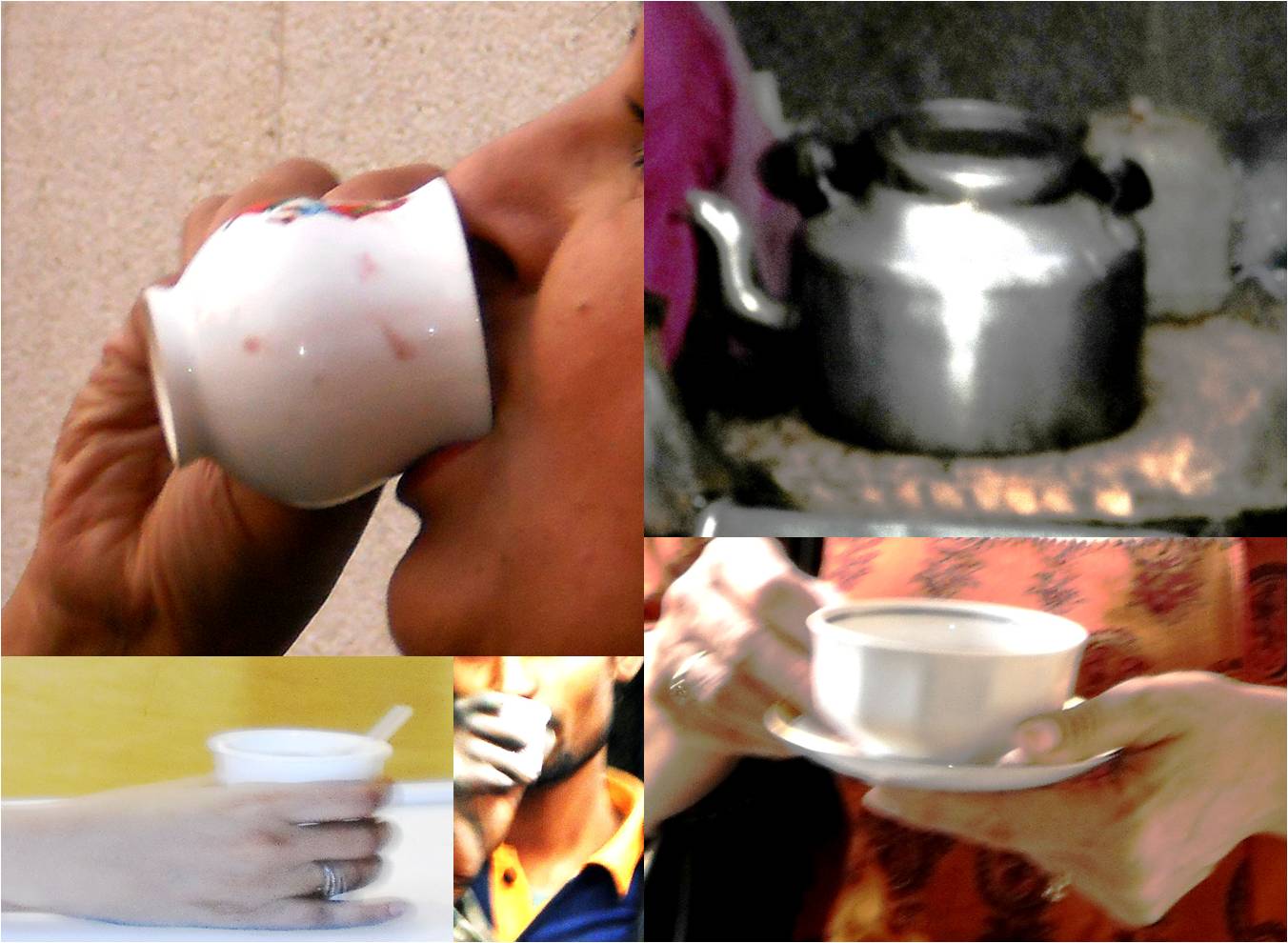
Earl Grey has a mildly citrus flavour and that fragrance of bergamot I so love. I’m referring to Earl Grey the tea and not Earl Grey who was the British prime minister in the 1800s, after whom this tea is named. Each tea bag has been filled with a specific quantity and variety of tea leaf, cultivated using a particular soil, grown in a particular climate and blended in a particular way to provide a specific flavour. We can have the same tea-leaf plucked at differing seasons to give a different flavour and blend of tea. The whole process of growing and blending tea is quite complex but I know what I like to drink. On most mornings it’s ‘Twinings Earl Grey’ that graces my tray.  I could write eulogies about its flavour and whatever else but I cannot change its nature and particular taste, nor expect it to do anything other than make tea. Well, soak in the heated water, so that I can make a cup of tea. 
 
Morning tea-time is inevitably a time of reflection on the previous day, unresolved thoughts left over from earlier in the week, and more. Tea, like most people and things around me, has become a kind of reference point to deal with many issues. I enjoy a variety of teas but when I pick Earl Grey, I know what to expect and do not expect it to taste like Japanese Sencha or Echinacea, nor want it to.

 
But, that is not what I seem to do with myself and also with other people. I have an inherent need for everything to be orderly and rational; expect everything to get done with a minimum of fuss. And most of all, in a state of being that is calm, never disturbed. It is when this does not happen, that I chide myself, wish things were different, that I had greater control over my emotions and the power to just breeze through life. I also wish that people around me [the way they behave] were other than what they are. There have been times when I’ve expected people to respond to circumstance in the way I would, thinking there cannot be another way, that as humans beings we must be the same. And if they didn’t, which inevitably did happen, I’d dissect the whole thing and after venting, when the mind was calmer, I’d see how my expectations were not reasonable. Gradually I started realizing that the beauty of life actually lay in this diversity of being. And others were only reflecting ideas that lay latent in my mind, surprisingly unknown to me.
 
Even as we are essentially the same, the nature of being human appears to be a complex phenomenon. We are different aspects of the same, have the same essential spirit, but are never the same. Being so, would defy the very nature of the duality of being. Just as tea comes basically from the two main species of the Camellia family, grown in China and India, we are all of the same species of Homo sapiens. But just like there are many hybrids of these two tea bushes, we humans too have differing characteristics within the same species. Not everyone is sensitive, compassionate, stubborn or selfish. Some of all human tendencies must be prevalent in each one of us, but in varying degrees, and each of us has certain defining characteristics. Some of which are genetic, some are learned, and some are cultural and environmental. It can get quite confusing because each of us has so many layers of familial and cultural histories that frame our being and thinking, but drawing this parallel with tea enables one to look at things more objectively.  And this morning, it was a refreshing reminder to start off the day. 

Taking this analogy with tea a little further, I thought, if I do not like someone – the way they taste, what I mean is - the experience of being with them, then all that is required is to not drink that flavour again. Seems simple ha!


But with people it is another story altogether. It’s been said that what occurs in life is what we have manifested by virtue of our feelings. Now that is a tough one. There’s no-one to blame for the people you bring into your life, including the family you were born into. We have supposedly felt a certain way, harboured certain ideas and therefore these people are there to create that particular experience. And unlike dumping a tea bag into the bin, or leaving a cup of tea half-drunk if I don’t like it, with people it pans out differently. We have to go through the experience. Understand its significance in our lives and in defining us by looking at the reflection it presents: of what I appear to be and think or feel and so on and so forth. Each experience has been a process in realizing the deeper truths of my being; understanding people better and handling life with less anxiety. Watching oneself live is a fascinating process. It’s also hard work. And even though this has been a daily discipline for years, the process is not quite fool-proof yet. I still lament having to extricate myself out of painful circumstances. And I ask myself, why? Why do you keep doing this? Asking no-one in particular, but perhaps my deeper sub-consciousness, whether it ever stops: these mistakes – the missed-takes that I don’t seem to get past?

Tea is an important ritual in my life, a refreshing drink at best, sometimes nourishing too. However, I can live without tea. But people, on the other hand, are not so easy to dismiss. Some yogis and spiritual aspirants do seem to eschew involved relationships but as long as one lives [unless you retire into some remote forest with only wild animals for company] human relationships seem to be the fulcrum of life. Without them there is nothing to do. Just imagine being born on earth and there being no-one else around. Who would teach you how to walk or talk, prod you into yelling, allowing you to experience that emotion of anger? Who would move you to tears, to write verse of love and longing? Compare yourself with? Compete with and more? Who would you fight with? [Imagine there being no Mahabharata, especially its sagacious wisdom on the art of asserting your truth/dharma as outlined in the Gita]. Seems pretty awesome, to consider this emptiness: the futility of a life without the noise one usually bitches about. But then the question arises: why is living with people such an arduous experience? A life-time can go past and one still doesn’t quite know what to make of people, even those close to you, with whom you may have spent the better part of your life.
 
It’s not easy for most, but when you are sensitive and intense, it’s especially hard to succinctly communicate the fullness of what you see and feel in any given circumstance. So one’s emotions tend to get into a mess. In order to extricate one self from this, most of us have to argue, discuss, think and re-define ideas before we can move on. This I have to confess I do find irksome. Why does it take so much time and energy just to get simple points across? But there is no question of avoiding these confrontations. Sometimes, we think we do: we all talk of moving on but the fact is that we re-create circumstances that generate similar feelings unless we have dealt with them. The faces may change but unless realization dawns of what it is that we do and why, things never really change.
 
Sometimes, strangely, I’ve forgotten what I have been capable of feeling in relation to a particular situation and or person and returned with gusto that I’ve regretted. When there is a distance, when the pain or irritation is a dull memory, it seems as if I’ve dreamt up the whole thing. But people don’t change, most don’t even grow up. What I mean is that we all age, but don’t necessarily become emotionally mature. Overcoming our pain and negative feelings is hard work. So at best our cries get muffled, consequently creating complex, un-de-code-able, irrational behaviour patterns that are difficult to live with. Living without people is not an option; living harmoniously with them takes a great deal of skill; balancing the inner, emotional landscape while also managing our interactions on the physical plane. Living together, I have realized is an art, perhaps the greatest of all human endeavour. 
 
If the teas leaves bound together in this small, almost opaque paper bag, whose brew I now sip, could speak, I wonder what they would say about their experiences of dealing with the logistics of compassion and compromise, so essential to a happy co-existence in any limited space.


This story is also available as an audio recording on You Tube, recorded by Suraj Andrews       https://youtu.be/jGa2jDI1HzQ